
Village in the Shade Guide: Farming, Mining, and Beginner Tips
A Village in the Shade guide to farming, animal care, hunting permits, quarry shortcuts, friendships, modes, and later milestones.
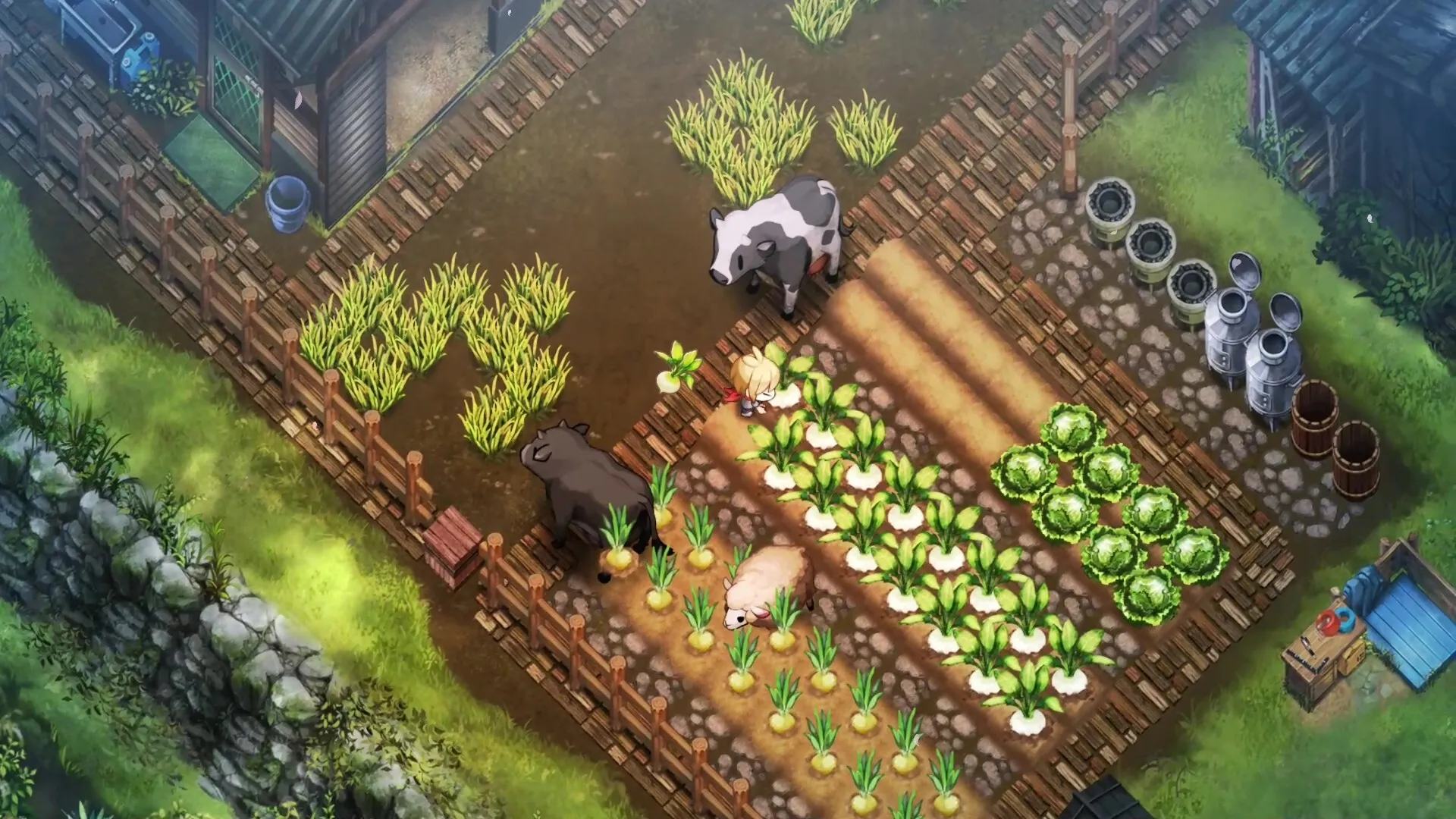
Where should you start in Kagatsu?
Kagatsu’s quiet countryside gives you plenty to do, but crops, animals, and village mysteries compete for your attention. This Village in the Shade guide helps you organize those activities so your farm leaves room for exploration and friendships. Choose your mode, learn the systems, and build a manageable routine.

Village in the Shade - Release Date Announcement Trailer · NIS America
Official promotional trailer used as general reference for this game. It is not a topic-specific tutorial, a Patch 1.30 demonstration, or a device benchmark. The article does not depend on its narration.
This beginner orientation covers the original 2026 game and its Western English version, using official material collected on October 28, 2026. Steam update details refer to the official Patch 1.30 announcement and feature notes. Several system explanations also draw on Nippon Ichi Software’s Japanese promotional pages.
Choose your experience before starting
The peaceful option has two names in the supplied English material. NIS America’s official Village in the Shade overview calls it Peaceful Life Mode, while the Steam English patch notes use Village in the Sunshine Mode.
| Mode | Confirmed distinction | Consider it if… |
|---|---|---|
| Village in the Shade Mode | Includes the village-code and horror side of the experience | You want to explore Kagatsu’s unsettling premise |
| Peaceful Life Mode / Village in the Sunshine Mode | Optional non-horror choice that prevents breaking the village code | You prefer concentrating on countryside life |
Choose the peaceful option at the start if avoiding horror matters to you. In a developer interview published by Game8 on June 15, 2026, the team said the starting mode cannot be changed partway through a playthrough. Plan your choice accordingly; this is an attributed developer statement rather than a new Patch 1.30 hands-on test.
Keep your commitments manageable. As activities become available, try this suggested order:
- Check your crops and complete their immediate care.
- Feed and care for any livestock you own.
- Check your mailbox for progression-related letters.
- Choose a main outing, such as gathering, fishing, or quarry exploration.
- Make room for conversations and village activities.
This is a planning framework. Adjust it to the instructions and events you encounter, especially when a new activity adds another responsibility.
Farming, paddies, livestock, and processed goods
The confirmed crop cycle is straightforward: sow seeds, water crops, harvest them, and ship produce to earn income. Your first farming goal should be learning that cycle at a scale you can comfortably maintain.
Expand at a manageable pace. Add planting work gradually while learning how much time your other activities need. The official evidence reviewed here does not establish a highest-profit starter crop, exact growth calendar, or ideal field layout.
| System | Confirmed activities | Beginner planning tip |
|---|---|---|
| Field farming | Sow seeds, water crops, harvest, and ship produce | Learn the complete cycle before expanding your planting commitments |
| Paddy farming | Prepare flooded growing areas for rice and crops such as lotus root | Treat paddies as another farming system to learn |
| Livestock | Raise animals and obtain products such as eggs and milk | Include feeding and care in your routine |
| Crafting and processing | Gather materials, make equipment, and produce goods such as cheese | Choose a project with a clear use for your farm |
Understand how ducks fit into paddies
The Japanese official rice introduction confirms that paddies support rice and lotus root. It also describes ducks helping remove weeds from those flooded growing areas.
That creates a practical connection between animal care and farming. Patch 1.20 increased the number of weeds ducks eat according to their affection level, so their usefulness is tied to that relationship.
Ducks provide help with paddy maintenance, but the official documentation does not establish that they eliminate every weed or replace all upkeep. Continue checking the growing area yourself.
Give processing a purpose
Livestock products can feed into processing, with cheese provided as an official example. Gathering materials and crafting processing equipment also expand the activities available to you.
The same reasoning applies to furniture and decorations. Crafting can improve your home and garden as well as support production. Choose projects around your current interests, and avoid assuming every processed item has a proven profit advantage; no verified sale-price comparison is supplied.
Gathering, hunting, and quarry trips
Outdoor activities serve different purposes. Gathering and fishing let you explore the surrounding countryside, hunting requires the appropriate permission, and quarry exploration offers ores and gemstones.
Give each outdoor trip a clear purpose. You can explore more freely when you know whether the outing is about collecting materials, learning a system, or reaching a deeper quarry level.
| Activity | What official material confirms | What to check before leaving |
|---|---|---|
| Gathering | Wild plants can be collected around the village | How the outing fits around your farm work |
| Fishing | You can fish in rivers | Whether fishing is your main goal for the trip |
| Hunting | Bows and traps are available; permission depends on the target | Whether you have the required hunting license |
| Quarry exploration | Ores, gems, deeper floors, and carts at ten-floor intervals | Remaining time, stamina, and your return plan |
Obtain the right hunting license
The Japanese official hunting introduction states that you must obtain a license appropriate to the animal you intend to hunt before heading into the mountains.
Do not assume that one permit covers every target. Confirm the permission for the animal you want to pursue, then explore the bow or trap methods described in the official material.
Use quarry carts as planning markers
The quarry contains ores and gemstones, with more valuable finds becoming easier to obtain as you descend. Official guidance specifically emphasizes managing both time and stamina.
Carts appear at ten-floor intervals. They provide shortcuts to the entrance and help you travel back into the quarry when resuming exploration. Those intervals give your mining trips useful planning markers.
Before pushing farther:
- Check the time and your remaining stamina.
- Consider the route back to the entrance.
- Decide whether another descent fits your current resources.
- Use the available cart shortcuts when returning or resuming.
Build friendships alongside your farm
Village friendships lead to their own events. Residents may initially seem distant, but conversation, gifts, helping out, and festivals all contribute to getting closer.
As relationships develop, villagers can approach you with concerns or invite you into their homes. The Japanese systems page also mentions invitations to meals.
A practical approach is to include social contact in trips you already want to make. Talk with residents while exploring the village, take part in festivals, and respond to opportunities to help. This gives friendships regular attention without requiring every outing to revolve around gifts.
The supplied official material does not include a complete favorite-gift chart, friendship-point formula, or resident schedule. It also does not establish marriage mechanics. Keep those gaps separate from the confirmed relationship events.
Patch 1.30 adds a later reward for building affection: once the protagonist’s birthday feature is unlocked, villagers at affection level 3 or higher offer birthday wishes and may provide a present. That is a later milestone, while everyday interaction is something to incorporate as you progress.
Recognize later milestones without rushing them
Some features mentioned in update coverage belong well beyond your opening routine. Recognize those milestones when they become relevant, while concentrating first on the systems already available to you.
| Later feature | Confirmed progression context | Why it matters |
|---|---|---|
| Silkie Chickens and Mallards | Become purchasable at Chinana’s stall in Autumn of Year 1 | Add livestock variety |
| Furniture Catalog | Requires Autumn of Year 1, a qualifying furniture purchase, and its letter-led event | Lets you reorder qualifying furniture you previously purchased |
| Seeder | Requires the crossroads hokora to reach at least its third restoration stage, followed by a letter | Helps with planting and fertilizer application |
| Protagonist’s birthday | Requires Year 2 and additional mode-specific story progress | Adds birthday interactions with villagers |
The seeder illustrates how later progression can change farm work. It initially handles seeds, seedlings, and fertilizer across a three-tile area ahead of you, and upgrades at the anvil can expand its reach. Treat it as a future convenience when planning your farm.
The Furniture Catalog provides a similar convenience for decorating: qualifying repeat purchases arrive in your mailbox the next day. Its exact introduction requirements appear in the official first free update notes.
Check event conditions when an expected introduction does not happen. The catalog event can be delayed by rain or certain story scenes. Patch 1.30 also identifies thunderstorms and particular story sections as blockers for its new events.
How do the everyday activities fit together?
Farming and early income
Available crops change with the seasons, and higher-quality vegetables sell for more. Learn the planting, watering, harvesting, and shipping cycle before expanding. Paddies support rice and lotus roots; ducks help remove weeds. Winning a produce competition lets you give your products a brand name. No verified crop-by-crop profit table is supplied here.
Animals and livestock
Chickens provide eggs and cows provide milk. Silkie Chickens and Mallards become available at Chinana’s stall in Autumn of Year 1; they lay eggs daily and sometimes leave feathers. Fluffy Cows and Spotted Goats unlock after purchasing at least one goat. Patch 1.20 ties the number of weeds ducks eat to their affection.
Quarry exploration
Enter the Quarry for ores and gemstones. Break rocks to uncover stairs, watch for enemies, and manage your time and stamina. Minecarts at ten-floor intervals provide travel to the entrance and back to reached checkpoints. Use those intervals as planning markers rather than assuming every floor has a shortcut.
Crafting and cooking
Use blueprints and gathered materials at the workbench. Processing machines turn farm products into other goods, such as cheese from milk. Befriending villagers can unlock cooking recipes, and prepared meals can provide temporary benefits. Foods described in the supplied research include soba, soy sauce, miso, and tofu.
Fishing and hunting
Wait for a bite and respond to the timing markers in the fishing minigame. Fish can be eaten, shipped, cooked, or raised through fish farming. Hunting requires a permit for the target animal. Use a bow for active hunting or place traps while attending to other work; traps do not guarantee a catch.
Which guide should you read next?
Sources and verification
Checked October 28, 2026. Japanese promotional material and developer interviews are identified separately from the Western English release.
- Village in the Shade official English overview
- Original Japanese official systems page
- Japanese official rice introduction
- Japanese official hunting introduction
- Japanese official quarry introduction
- Official villager friendship introduction
- Village in the Shade’s Free Update #2 Releases Today!
- Village in the Shade’s Free Update #1 Releases Today!
- Game8 June 15, 2026 firsthand press preview and developer interview; original Japanese in-game rule-board screenshot
- Homepage activity details: official systems, official village guide, GAME Watch firsthand preview, and Famitsu feature, as recorded in the supplied homepage research.
FAQ
What should a beginner do first?
Can I play without the horror elements?
Does every quarry floor have a shortcut?
Is this Village in the Shade guide a complete walkthrough?
Related Articles
guide
Village in the Shade Sunshine Mode: Peaceful Play and Unlock Guide
Learn when to choose Village in the Shade Sunshine Mode, how Peaceful Life Mode works, and which birthday and farmland requirements differ.
guide
Village in the Shade Update: Patch 1.30 Unlocks and Event Guide
Explore the Village in the Shade update with Patch 1.30 unlock requirements, birthday events, seeder upgrades, furniture, and event troubleshooting.
guide
Village in the Shade Rules: Village Code and Night Exploration Guide
Learn the confirmed Village in the Shade rules, what night exploration reveals, and how Peaceful Life Mode prevents breaking the village code.
Was this helpful?
Thanks for the feedback!