
Village in the Shade Review: A Smart, Spooky Twist on Cozy Farming Sims
Village in the Shade’s published reviews describe a farming simulation whose village mystery and nighttime horror give familiar chores a different context.
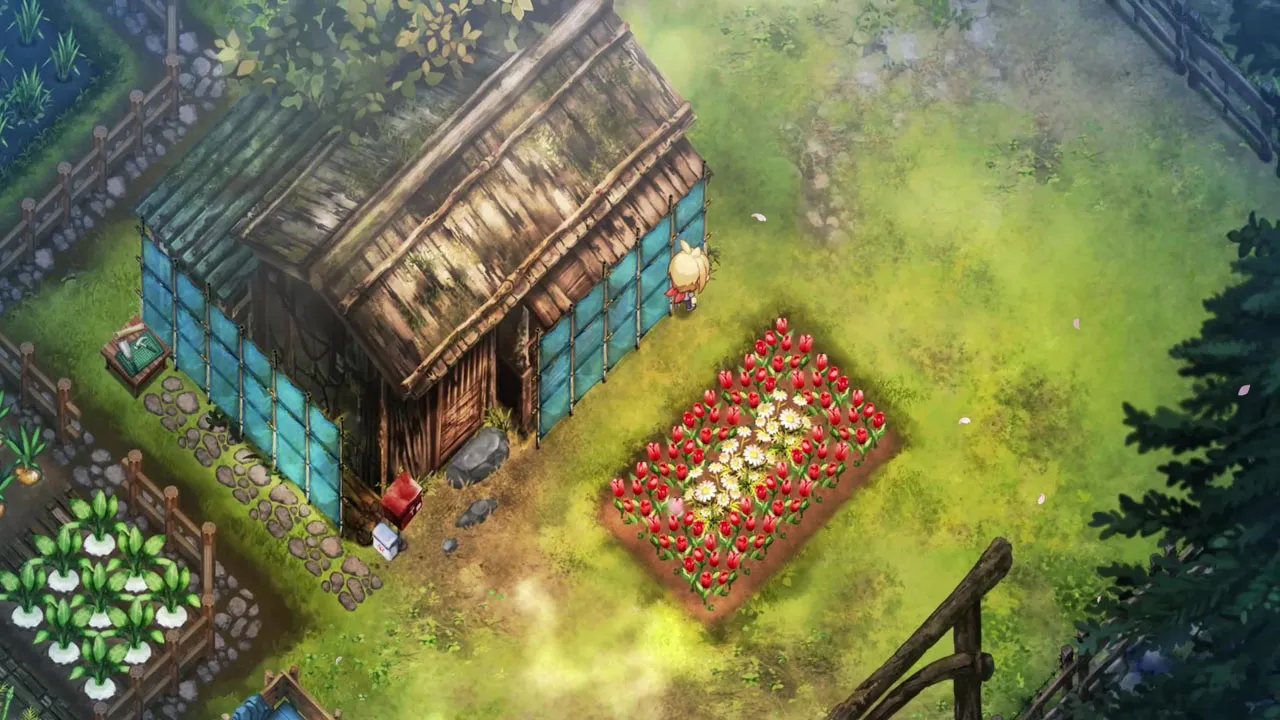
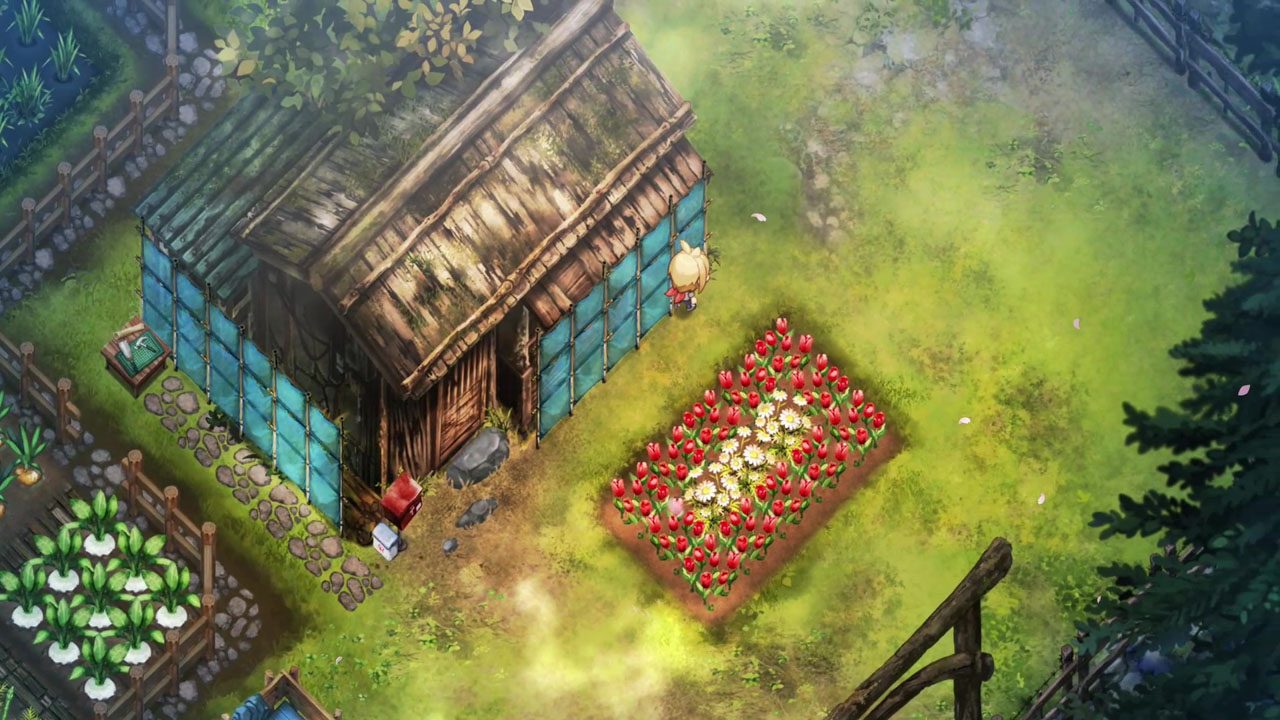
Village in the Shade review: an idyllic farm with something to hide
This overview compares published coverage; it is not a hands-on test by this wiki. The cited Nintendo Life score belongs to that publication. The original 2026 game is also available on Windows PC through Steam.

Is Village in the Shade really worth it? My thoughts after 50 hours. · Josh's Gaming Garden
Third-party English-language review with the creator’s reported 50-hour experience. The runtime and reported playtime are not a measured completion-time benchmark or this article author’s hands-on test.
Cover context: Official decorated-farm screenshot; illustrative, not an image captured by this article author.
Most farming simulators promise a peaceful escape, but this one asks why you need to escape in the first place. This Village in the Shade review explores how Nippon Ichi turns familiar cozy-game routines into an unsettling psychological mystery. The result is a farming adventure that feels comfortable on the surface while quietly questioning the fantasy of starting over.
Village in the Shade was released for Nintendo Switch 2 on October 27, 2026, and is also available on Switch and PlayStation 5. Published by NIS America and developed by Nippon Ichi, the game combines farming, exploration, social simulation, and supernatural horror in the remote Kagatsu Village.
The central idea is immediately unusual. After customizing a character, players watch that character fall into a well and apparently die. They later awaken years in the future, climb out unharmed, and return to a village where their disappearance has become local folklore.
That opening establishes the game’s core tension: Kagatsu looks like a welcoming mountain community, but its friendliness feels carefully rehearsed.
| Game detail | Information |
|---|---|
| Title | Village in the Shade |
| Developer | Nippon Ichi |
| Publisher | NIS America |
| Platforms | Nintendo Switch 2, Nintendo Switch, PS5, Windows PC |
| Genre | Farming simulation, adventure, relaxation |
| Players | One |
| Switch 2 release date | October 27, 2026 |
| Listed price | $49.99 |
| Review score cited by source | 9/10 |
How the farming gameplay works
At first, Village in the Shade follows a familiar farming-sim formula. Players receive a plot of land, gather tools, plant seeds, care for crops, collect materials, sell goods, and gradually become part of the surrounding community.
The game does not radically reinvent farming mechanics. Instead, it focuses on making ordinary actions feel worthwhile. Chopping trees, watering plants, mining ore, fishing, and collecting items all provide a steady sense of progress.
That familiarity is important because the horror works best when the routine feels safe. The game first encourages players to settle into the rhythm of village life before exposing the unsettling details beneath it.
| Core activity | What players can expect | Why it matters |
|---|---|---|
| Farming | Plant, water, harvest, and sell crops | Provides the relaxing daily loop |
| Resource gathering | Chop trees, break rocks, and collect materials | Improves tools and supports crafting |
| Fishing | Fish in local bodies of water | Offers a slower activity during exploration |
| Mining | Explore a procedurally generated quarry | Adds risk and material hunting |
| Exploration | Search Kagatsu and its side paths | Reveals lore, items, and secrets |
| Social interaction | Speak with villagers and learn local rules | Connects the peaceful setting to the horror story |
A major strength highlighted in the source review is the game’s gradual expansion. The first several hours concentrate on the basics, while later systems introduce more variety. Around the five-hour mark, players gain access to an abandoned quarry with procedurally generated floors and ore to collect. A skill-tree-style system appears later, rewarding players for finding and exchanging cursed objects.
This pacing gives the game a slow-burn structure. It also creates one of its biggest frustrations: new tutorials continue appearing well after the opening section.
A slow start that eventually pays off
The first hour is especially dialogue-heavy. Players may read several lines of instructional conversation, move a short distance, and then trigger another explanation. For experienced farming-sim players, that structure can feel unnecessarily restrictive.
However, once the main tools are available, the game becomes more engaging. The axe, pickaxe, hoe, watering can, and seeds open up the familiar routine that many players expect from the genre.
| Early-game phase | Likely experience |
|---|---|
| Character creation | Flexible appearance and androgynous presentation |
| Opening sequence | Surreal, violent, and story-focused |
| Tutorial village tour | Slow and heavily guided |
| Tool acquisition | Farming and gathering become more enjoyable |
| First exploration trips | The larger map begins to feel manageable |
| Later unlocks | Mining, cursed items, and deeper lore add variety |
Horror and the mystery of Kagatsu
The most distinctive feature in this Village in the Shade review is the way horror supports the farming-sim structure rather than replacing it. This is not simply a conventional horror game with crops added as decoration. The supernatural elements are designed to make the peaceful routine feel suspicious.
Villagers offer ordinary pleasantries, but those conversations are interrupted by strangely grim remarks. Early instructions include rules about staying indoors after 11 p.m., keeping secrets, and ignoring voices from the mountains. These warnings make the village seem less like a safe community and more like a place held together by collective denial.
At night, ghosts and other strange figures appear around the village. One visitor reportedly comes to the player’s door at 2 a.m., knocking loudly and offering clues about the protagonist’s forgotten past. Encounters like this give the player a reason to keep returning after the initial novelty of farming wears off.
| Horror feature | Effect on the experience |
|---|---|
| Mysterious resurrection | Makes the player’s identity central to the story |
| Village rules | Turn normal exploration into a source of tension |
| Nighttime visitors | Encourage players to break the daily routine |
| Ghosts and ghouls | Add danger and uncertainty after dark |
| Dark villager dialogue | Undermines the setting’s cheerful surface |
| Cursed items | Connect exploration to later progression systems |
The game’s strongest thematic question is also its most unusual: what are players trying to avoid when they escape into a peaceful simulation? Farming games traditionally offer a clean break from stressful work, social pressure, or a crowded city. Village in the Shade treats that fantasy as something worth examining.
Its horror suggests that a perfectly polite society may conceal anger, fear, and unresolved problems. The village’s darkness is therefore not just an aesthetic choice. It is a critique of the idea that a pleasant routine can permanently erase the difficult parts of life.
Art direction, music, and atmosphere
Visually, the game combines cute character sprites with environments that lean toward semi-realism. The contrast can seem strange at first, but it reinforces the story’s central themes. The characters look inviting and toy-like, while the world around them has more grounded lighting and texture.
This design becomes particularly effective as the day changes. Golden-hour lighting, evening shadows, and nighttime darkness give Kagatsu a stronger sense of place. The same location can feel welcoming in the afternoon and threatening after sunset.
The soundtrack also contributes to the atmosphere. The source review describes music with influences associated with Animal Crossing and Joe Hisaishi’s Studio Ghibli work. That comparison points to a gentle, melodic score that supports fishing, farming, and exploration without overpowering the setting.
| Presentation element | Strength | Potential limitation |
|---|---|---|
| Chibi characters | Makes villagers approachable and memorable | Can make darker moments feel visually disconnected |
| Semi-realistic environments | Creates contrast and stronger immersion | May appear plain beside more stylized farming games |
| Dynamic lighting | Gives the village different moods | Darkness can make some areas less inviting |
| Relaxed soundtrack | Supports long farming sessions | Players seeking intense horror may find it restrained |
| Large map | Encourages exploration and discovery | The many side paths can be confusing initially |
Character creation is another mixed area. The game allows players to shape an androgynous avatar, and villagers use they/them pronouns. That approach avoids forcing the player into a binary gender presentation.
However, the review notes that the customization system does not offer complexion options. That omission significantly limits how many players can meaningfully identify with the protagonist, especially in a game that emphasizes personal projection and escapism.
Player freedom and quality-of-life concerns
The biggest criticism in this Village in the Shade review concerns forced story progression. The game allows players to spend time farming, fishing, gathering, and shopping, but it does not always let them decide when to advance the narrative.
For example, a player may plan to fish for a while or visit a shop, only to be redirected into a mandatory tutorial or story event. That structure contrasts with more open-ended games such as Animal Crossing, where daily activities can often be completed at the player’s preferred pace.
The result is an uneven balance between cozy freedom and guided storytelling.
| Area | What works | What could be better |
|---|---|---|
| Daily routine | Farming and gathering are satisfying | Story interruptions can break momentum |
| Exploration | The map offers plenty to discover | Navigation takes time to learn |
| Story delivery | Mystery encourages continued play | Tutorials arrive too late into the game |
| Time system | No real-world clock creates flexibility | Long sessions can become easy to lose track of |
| Horror progression | Night events create anticipation | Players cannot always investigate when they want |
| Social systems | Villagers support the mystery | Romance does not appear to be a major feature |
The game’s time system is comparatively generous. An in-game minute lasts roughly one real-world second, and there is no requirement to follow a real-world calendar. That means players can spend extended sessions in Kagatsu without worrying about missing a narrow daily window.
This makes the game suitable for players who dislike strict stamina systems or demanding schedules. At the same time, the absence of stronger limits may make the experience feel less structured for players who prefer a tightly managed farming calendar.
Is Village in the Shade worth buying?
The answer depends on what you want from a farming game. If you are looking for a pure relaxation simulator with maximum freedom, the forced progression and long tutorials may be irritating. If you want a conventional romance system, this game may also feel limited compared with Stardew Valley, Rune Factory, Story of Seasons, or Coral Island.
But players who enjoy mystery, unusual storytelling, and horror-infused simulation should find much more to appreciate.
The source review awarded the game 9/10, praising its farming mechanics, art direction, and social commentary while criticizing its lack of player control during story progression. That score reflects a game that succeeds because of its ideas as much as its mechanics.
| Player type | Recommendation |
|---|---|
| Cozy-game newcomer | Try it if the horror premise appeals to you |
| Stardew Valley fan | Worth considering, especially for the darker tone |
| Horror fan | Recommended if you enjoy slow-burn mystery over constant scares |
| Sandbox player | Approach cautiously because story events are often forced |
| Romance-focused player | May feel disappointed by the limited emphasis on relationships |
| Visual-style enthusiast | Strong choice thanks to lighting and environmental contrast |
| Players sensitive to horror | Check the available “Village in the Sun” mode before starting |
Community reports about the alternate mode
Community reports mention a Village in the Sun mode that removes the horror elements. Player experience indicates that this mode is selected at the beginning rather than toggled freely during the game. Because this information comes from community discussion rather than the main review, players should verify the exact options in their regional release.
That mode could make the game more accessible to players who want the farming and exploration systems without ghosts, threatening dialogue, or nighttime encounters. However, the horror is closely connected to the game’s main themes, so removing it may substantially change the intended experience.
For the best first playthrough, players who can tolerate supernatural tension should consider the standard mode. Those who dislike horror can use the alternate option from the outset rather than forcing themselves through an uncomfortable campaign.
Final verdict
This Village in the Shade review finds a farming simulator with a genuinely distinctive purpose. Its core mechanics are familiar, but the game uses those mechanics to explore why idyllic routines are so appealing and what they might conceal.
The farming, fishing, gathering, and mining loops are satisfying enough to support long sessions. The setting becomes increasingly memorable as nighttime events and village rules expose Kagatsu’s secrets. The art direction and music further strengthen the contrast between comfort and unease.
Its major weaknesses are clear: the opening is over-tutorialized, later mechanics arrive slowly, story progression can interrupt personal plans, and character customization lacks complexion options. Even so, these issues do not erase the game’s ambition.
| Verdict category | Assessment |
|---|---|
| Farming mechanics | Strong and satisfying |
| Exploration | Rewarding but initially confusing |
| Horror | Effective, atmospheric, and thematically relevant |
| Story | Intriguing slow-burn mystery |
| Art and music | Beautifully suited to the setting |
| Player freedom | Weakened by forced progression |
| Accessibility for horror-averse players | Improved by the alternate mode |
| Overall score from cited review | 9/10 |
For additional release details and the original critical assessment, read the Nintendo Life Village in the Shade review.
Related guides
Media sources
Related Articles
media
Village in the Shade Gameplay: Farming, Horror, Exploration, and Beginner Tips
Village in the Shade combines farming, animal care, decorating, and friendships with a village mystery and nighttime supernatural events.
media
Village in the Shade Main Theme: Official Preview and Credits
You can hear Village in the Shade’s main theme at the start of Nippon Ichi Software’s official soundtrack sampler.
media
Village in the Shade OST: Sounds from the Shade Track List
Sounds from the Shade is the separately available Village in the Shade soundtrack, with 38 tracks and a checked US Steam price of 9.99 dollars.
Was this helpful?
Thanks for the feedback!