
Village in the Shade Gameplay: Farming, Horror, Exploration, and Beginner Tips
Village in the Shade combines farming, animal care, decorating, and friendships with a village mystery and nighttime supernatural events.
Why Village in the Shade Gameplay Stands Out
This overview compares published coverage; it is not a hands-on test by this wiki. The cited Nintendo Life score belongs to that publication. The original 2026 game is also available on Windows PC through Steam.

The Perfect Farming Sim for Halloween is here! Village in the Shade · Josh's Gaming Garden
Third-party English-language launch-day gameplay used as general reference for the 2026 original game. It is not a dedicated tutorial or proof of a particular location, setting, route, or patch behavior.
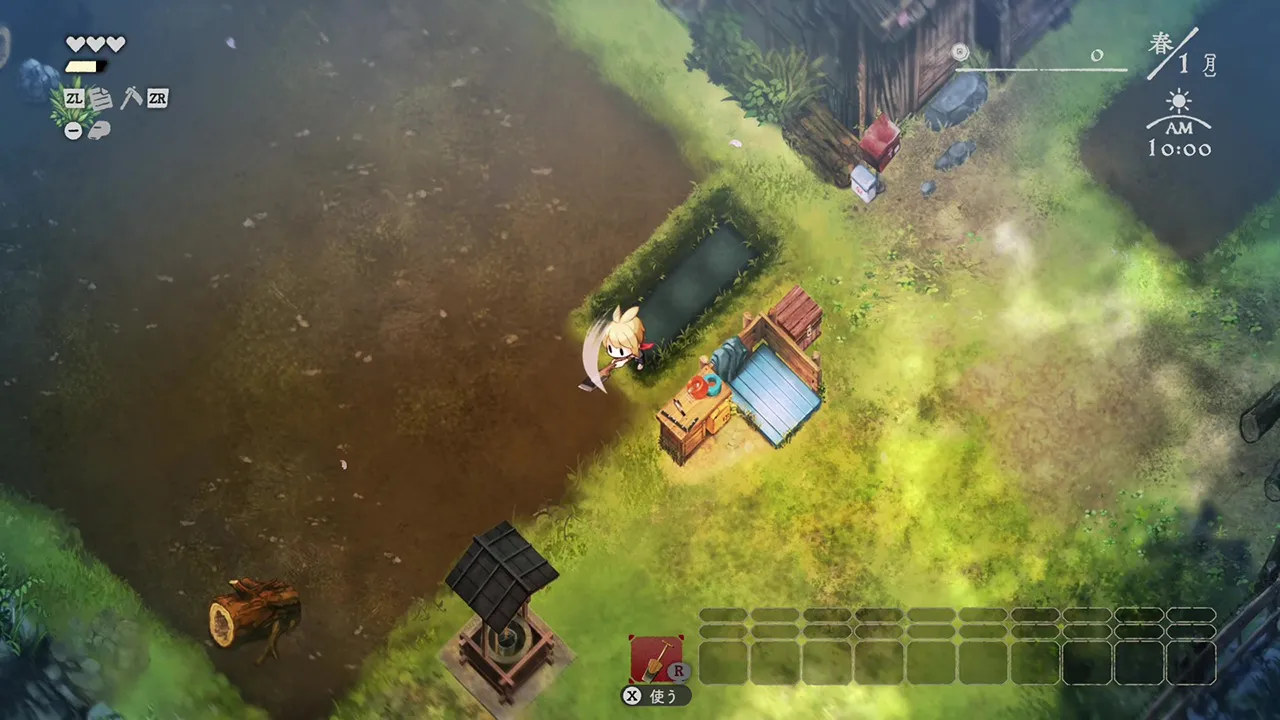
Cover context: Official flooded-farm screenshot illustrating the original game farming system.
Village in the Shade gameplay takes the familiar comfort of a farming simulator and slowly turns it into something unsettling. That contrast matters because the game is not simply offering another crop-and-crafting routine; it uses farming, exploration, and village life to question why players seek peaceful virtual worlds in the first place.
Developed by Nippon Ichi and published by NIS America, Village in the Shade combines simulation, adventure, relaxation, and horror. It launched on Nintendo Switch 2 in North America and Europe on October 27, 2026, and is also available on Nintendo Switch and PlayStation 5. The Switch 2 version is listed at $49.99.
A recent Nintendo Life review awarded the game 9/10, praising its satisfying farming loop, atmospheric presentation, and thoughtful commentary on escapism. However, the review also noted that forced story progression can sometimes interrupt the player’s plans.
What Is Village in the Shade?
The game begins with a deliberately shocking twist. After creating a custom character, players see that character fall down a well and seemingly die. Instead of ending the adventure, the protagonist awakens years later and climbs into the mountain community of Kagatsu Village.
The villagers welcome the newcomer, but their friendliness quickly feels artificial. Kagatsu has rules, secrets, and nighttime threats that gradually expose the darker side of the settlement.
| Feature | Details |
|---|---|
| Developer | Nippon Ichi |
| Publisher | NIS America |
| Genre | Farming simulation, adventure, relaxation |
| Platforms | Nintendo Switch 2, Nintendo Switch, PlayStation 5, Windows PC |
| Players | Single-player |
| Release date | October 27, 2026 |
| Also known as | Hono Gurashi no Niwa |
| Switch 2 price | $49.99 |
| Review score cited | 9/10 from Nintendo Life |
The opening deliberately follows several farming-sim conventions. You leave your former life behind, receive a new home, meet friendly villagers, and begin building a routine. The difference is that Village in the Shade gives that familiar setup a supernatural explanation.
The result is a game that can initially feel like a traditional cozy farming title before revealing that its peaceful environment is not as safe as it appears.
Farming and Daily Village Life
The early hours of Village in the Shade gameplay focus on learning the basic tools and establishing a reliable daily routine. Players receive familiar equipment, including an axe, pickaxe, hoe, and watering can. Seeds, crops, gathering, fishing, and selling items form the foundation of the experience.
The individual mechanics are not designed to completely reinvent the farming genre. Instead, the game emphasizes how satisfying ordinary tasks feel. Chopping a tree, watering plants, collecting materials, or selling vegetables provides a steady sense of progress.
| Core activity | What it contributes |
|---|---|
| Farming | Produces crops and establishes a dependable income |
| Chopping trees | Provides wood and clears portions of the environment |
| Mining | Supplies ore and introduces more dangerous exploration |
| Fishing | Offers a quieter activity and another source of items |
| Gathering | Encourages players to explore the village and surrounding paths |
| Selling items | Converts routine work into money for future progress |
| Villager interaction | Reveals the contrast between polite dialogue and hidden threats |
One helpful feature is the lack of a real-world clock. In-game minutes pass in real time, with each minute reportedly lasting about one second. This gives players much more freedom than a system that forces the game world to follow the actual time of day.
That design makes it possible to spend several in-game days exploring, fishing, or working on the farm without worrying about missing a real-world deadline. It also supports the game’s relaxing side, especially during peaceful moments by the lake or in Kagatsu’s wider countryside.
However, the game does not always provide complete freedom. Story events and tutorials can interrupt a planned routine, forcing the player to hunt, explore, or learn a new system before returning to farming.
Progression: When the Game Opens Up
The first hour may test the patience of experienced farming-sim players. The tutorial is dialogue-heavy, and instructions can arrive in small stages. Players may move only a short distance before another conversation or explanation begins.
That structure is a weakness, but it also protects the game’s slow-burn design. Once the main tools are available, the daily loop becomes more enjoyable and less restrictive.
Early progression milestones
The game continues introducing new systems several hours into the adventure. This means players should not assume that the opening farming mechanics represent the entire experience.
| Approximate point | New element reported |
|---|---|
| Opening hour | Character creation, village introduction, basic tutorial |
| Early game | Axe, pickaxe, hoe, watering can, and seeds |
| Around five hours | Abandoned quarry with procedurally generated floors |
| Around 10 hours | Skill-tree-style system connected to cursed items |
| Nighttime exploration | Ghosts, ghouls, unusual dialogue, and supernatural events |
| Ongoing story | Clues about the protagonist’s disappearance and resurrection |
The abandoned quarry is one of the first major expansions to the routine. Its procedurally generated floors provide an opportunity to gather metal ore and explore an area that feels closer to a traditional dungeon or mining zone.
Later, a skill-tree-like system gives players rewards and items in exchange for cursed objects found during exploration. This helps connect the farming loop to the game’s horror and adventure mechanics.
The delayed introductions are useful for players who enjoy discovery, but they may frustrate anyone who expects a complete toolset immediately. A practical approach is to treat the first several hours as an extended onboarding period rather than judging the full game by its opening.
Horror, Rules, and the Dark Side of Kagatsu
The horror elements are not simply decorative. They are built into the village’s schedule, dialogue, and social structure.
Early conversations introduce rules that sound increasingly ominous. Among them are warnings about staying outside after 11 p.m., revealing other people’s secrets, and responding to voices coming from the mountains. These instructions transform ordinary village life into a series of questions: Who created the rules? What happens when they are broken? Which villagers know more than they admit?
At night, ghosts and ghouls patrol the streets. One reported encounter involves a figure knocking on the player’s door at 2 a.m. and offering information about the protagonist’s past in exchange for coming outside.
| Horror feature | Effect on gameplay |
|---|---|
| Village rules | Makes routine exploration feel risky |
| Nighttime creatures | Adds danger to areas that seem harmless during the day |
| Strange villager dialogue | Hints that Kagatsu’s friendliness is partly performative |
| Cursed items | Connects exploration to later progression |
| The protagonist’s resurrection | Creates a long-term mystery |
| Late-night encounters | Rewards curiosity while building tension |
This combination gives the farming routine a second meaning. Planting crops and fishing are not only relaxing activities; they are ways of maintaining a false sense of normality while the village’s secrets continue to surface.
Players who want a completely calm experience should know that the horror is part of the main design. Community reports indicate that the game includes a “Village in the Sun” mode that removes the horror elements. Player experience suggests this mode is selected at the beginning rather than switched on and off freely, so check the available options before starting if you prefer a lighter presentation.
Art Direction, Sound, and Character Creation
The visual style is one of the most distinctive parts of Village in the Shade gameplay. Characters use cute, chibi-style designs, while the surrounding world has a more realistic appearance. That contrast supports the game’s central theme: a charming surface with something more troubling underneath.
Lighting also plays an important role. Different times of day change the mood of Kagatsu, with golden-hour scenes offering a warm, peaceful atmosphere before nighttime introduces a more threatening tone.
The soundtrack reportedly draws inspiration from Animal Crossing and the work of composer Joe Hisaishi, including music associated with Studio Ghibli films. The result is a gentle audio identity that makes the darker moments feel more disruptive.
| Presentation element | Player impact |
|---|---|
| Chibi characters | Keeps the village approachable and visually inviting |
| Semi-realistic environments | Adds texture and makes the setting feel grounded |
| Time-of-day lighting | Separates peaceful daytime from dangerous nighttime |
| Gentle soundtrack | Reinforces the relaxation-focused farming loop |
| Supernatural interruptions | Creates tension without abandoning the cozy atmosphere |
Character creation allows players to choose an androgynous appearance, and villagers refer to the protagonist with they/them pronouns. The cited review also criticized the lack of complexion options, which limits how closely players can represent themselves.
The game reportedly does not include romance systems. Community discussion identifies this as either a drawback or a benefit depending on the player. Those expecting Stardew Valley, Story of Seasons, or Rune Factory-style relationships should keep that difference in mind.
Beginner Tips for Village in the Shade Gameplay
The game’s systems are introduced slowly, so a little preparation can make the opening more comfortable.
| Tip | Why it helps |
|---|---|
| Accept the slow tutorial | Important tools and systems arrive gradually |
| Keep a flexible daily plan | Story events may interrupt farming or shopping |
| Explore after unlocking tools | New equipment opens paths and resource opportunities |
| Save useful materials | Ore, wood, crops, and cursed items support different systems |
| Pay attention to dialogue | Villager conversations often signal lore and danger |
| Treat nighttime as a separate phase | The village changes after dark |
| Do not rush the story | Later mechanics add depth to the initial farming loop |
1. Do not overcommit to a strict schedule
Because story progression can force a new activity, avoid planning every in-game minute. A flexible routine is better than setting aside a short window for fishing and assuming nothing will interrupt it.
2. Prioritize basic tools and seeds
The first major improvement to the daily loop comes when the axe, pickaxe, hoe, watering can, and seeds are available. Focus on reaching that point before worrying about optimizing profits.
3. Explore once the quarry becomes available
The quarry adds procedurally generated floors and metal ore, making it an important source of materials. It also provides a change of pace from farming and helps reveal the game’s adventure side.
4. Read unusual dialogue carefully
Most villagers may sound pleasant, but sudden threatening or strange remarks can provide clues about Kagatsu’s rules and history. Dialogue is not merely background decoration in this game.
5. Decide on the horror mode before starting
If you want the full mystery, choose the standard experience. If horror is uncomfortable for you, investigate the “Village in the Sun” option before confirming your save. Community reports indicate the choice may not be changeable later.
Is Village in the Shade Worth Playing?
Village in the Shade gameplay is best suited to players who enjoy the structure of a farming simulator but want a stronger narrative hook. The farming is accessible, the environment is attractive, and the horror gives ordinary activities additional meaning.
It may be less appealing to players who expect complete scheduling freedom or a fast tutorial. Forced story progression can disrupt carefully planned routines, and the game’s deeper mechanics are introduced later than some players may prefer.
| Player type | Recommendation |
|---|---|
| Farming-sim fans | Strong choice, especially if you want a darker premise |
| Horror fans | Worth considering for the village mystery and nighttime encounters |
| Cozy-game players | Try it with the alternate mode if horror is a concern |
| Sandbox players | Approach cautiously because story progression is forced |
| Romance-focused players | Be aware that community reports indicate no romance system |
| Exploration fans | Good fit once the quarry and supernatural elements open up |
The game’s strongest achievement is its thematic connection between mechanics and story. It lets players enjoy the comfort of routine, then asks why that comfort is so appealing. That is a more ambitious idea than simply adding ghosts to a farming game.
For a deeper critical overview, read the Nintendo Life review of Village in the Shade, which covers the game’s farming systems, visual design, horror themes, and limitations.
Final Verdict
Village in the Shade is a thoughtful farming adventure with a supernatural edge. Its core activities—planting, gathering, fishing, mining, and selling—are familiar, but the game uses them to build an increasingly uneasy picture of Kagatsu Village.
The opening is slower and more restrictive than ideal, yet the experience becomes more compelling once the main tools, quarry, cursed items, and nighttime mysteries begin to connect. Players willing to wait through the tutorial should find a substantial simulation game beneath the initial hand-holding.
Ultimately, Village in the Shade gameplay succeeds because its horror is tied to its central question: what are we trying to escape when we imagine a perfect rural life?
Related guides
Media sources

Related Articles
media
Village in the Shade Main Theme: Official Preview and Credits
You can hear Village in the Shade’s main theme at the start of Nippon Ichi Software’s official soundtrack sampler.
media
Village in the Shade OST: Sounds from the Shade Track List
Sounds from the Shade is the separately available Village in the Shade soundtrack, with 38 tracks and a checked US Steam price of 9.99 dollars.
media
Village in the Shade Review: A Smart, Spooky Twist on Cozy Farming Sims
Village in the Shade’s published reviews describe a farming simulation whose village mystery and nighttime horror give familiar chores a different context.
Was this helpful?
Thanks for the feedback!